


I’m Taro (@motekispace). Right now I travel the world with everything I own packed into a 20-liter backpack. That even includes winter clothes.
When I’m moving around the world as a digital nomad, travelers I meet sometimes ask me, “How can you live with such a small backpack?” So in this article, I’ll share how I, a digital nomad, think about belongings. I hope it helps if you want to travel with as few belongings as possible.
Choose versatile belongings as a digital nomad
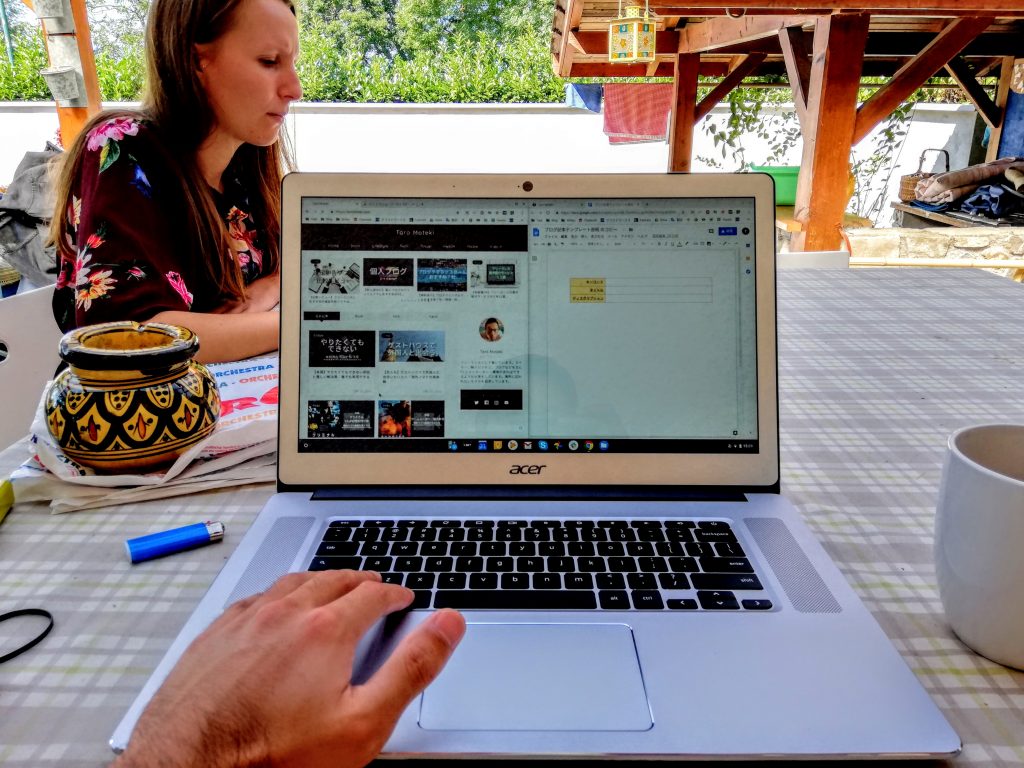
In short, a digital nomad’s belongings should be “versatile.” Here’s why:
- The longer someone has been a nomad, the less quirky their belongings are
- If you only carry special items, losing them hurts
- In the end, people who can live in any situation are the strongest
Those are my reasons.
The longer someone has been a nomad, the less quirky their belongings are
The longer someone has been a digital nomad, the less quirky their belongings are. I often get the chance to talk with digital nomads from other countries at guesthouses and coworking spaces. When that happens, the conversation usually turns to belongings, and I feel that people who have been nomads for a long time naturally carry a carefully chosen set.
- Things you can buy anywhere
- Clothes you can wear in all kinds of situations
- The bare minimum of toiletries
It’s a lineup that makes you think, “Ah, that makes sense.” When belongings come up without anyone mentioning how long they’ve been nomads, it usually goes like this:
- Nomad A: Do you know this? It’s super useful!
- Nomad B: I used to use that, but I stopped after I lost it in ___!
Naturally, the one who has been a digital nomad longer is the second one. This is especially noticeable with digital nomads who haven’t gone back to their home country for years since they started traveling. The people who say “If it’s a backpack, it has to be ___” are often newer nomads.
If you only carry special items, losing them hurts
Digital nomads travel to many countries and places. If you carry one special item you’re attached to, the shock when you lose it is huge. That’s because, depending on where you’ve moved, it often isn’t available in the first place.
- Buy an expensive ___
- Lose it in Myanmar
- Can’t find anywhere that sells it
- Feel down…
For example, a nomad who insists on a PC with a Japanese keyboard will have a hard time buying a new one abroad. If you mainly carry things you can buy anywhere, they’re easy to replace when you lose them.
In the end, people who can live in any situation are the strongest
The longer someone has been a digital nomad, the more I feel, “This person could live anywhere.” For example, some people wear glasses because contact lenses are hard to buy. Some European digital nomads shut themselves away to work in lodges on mountaintops, so I realized that being able to “live anywhere” really matters.
Still, some things are non-negotiable
Everyone has things they absolutely can’t do without. Recently, I bought these items:
- Laptop stand
- Bluetooth keyboard
- Bluetooth mouse
That adds about 600 g to my belongings, but I bought them to build a proper work setup. I work as a writer, blog, and do import resale, so I’m often glued to my computer all day. Working on just a laptop, I kept getting stiff in my neck and shoulders. These three items are standard gear for digital nomads, and when a digital nomad from New Zealand lent them to me for a day, I was blown away.
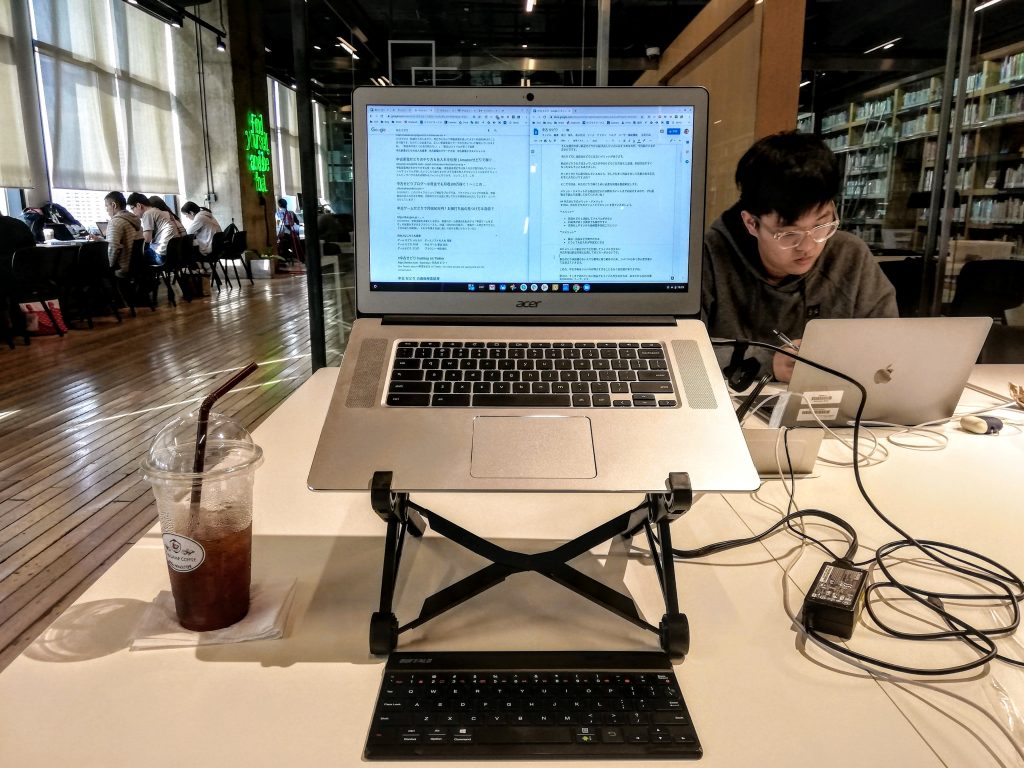
I’m a digital nomad who travels with minimal belongings, but being able to work comfortably matters too, so I added a few non-negotiables.
Tips for reducing a digital nomad’s belongings
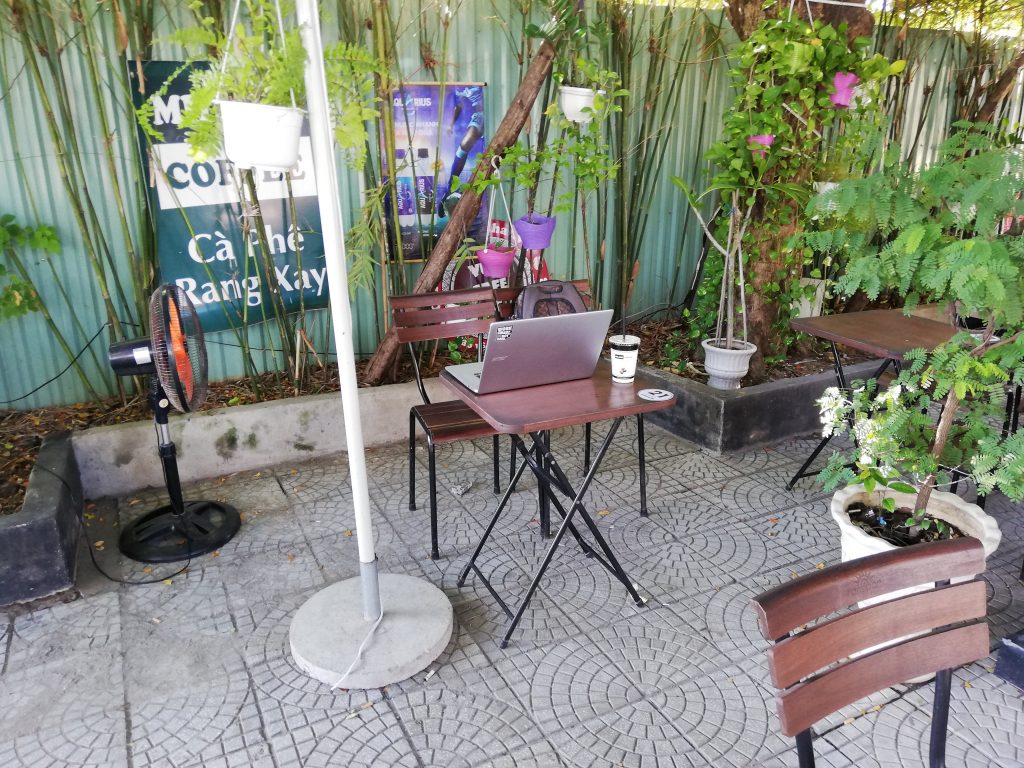
As someone who lives with everything packed into a 20-liter backpack, here’s how I keep a digital nomad’s belongings to a minimum.
- Keep clothes, the bulkiest items, to a minimum
- Don’t carry things you rarely use
- Drop the idea of a second bag
Keep clothes, the bulkiest items, to a minimum
When you want to cut down, first see whether you can reduce your clothes, since they take up the most space. Here are the clothes I’m packing right now:
- Quick-dry T-shirts: 3
- Underwear: 2
- Socks: 3 pairs
- Pants: 1 pair
- Shorts (doubling as swim trunks): 1 pair
- Light jacket: 1
- Uniqlo down jacket: 1
- Light training wear (top and bottom): 1 set
With these, I can handle a cold winter and still stay comfortable on the beaches of Phuket, Thailand. Because I keep my clothes to the minimum, I can fit everything into a 20-liter backpack.
I do laundry almost every day
I usually do laundry pretty much every day.
- Method: hand wash
- Where: in the shower
- When: in the morning
I do my laundry when I shower in the morning. If I hang it during the day, it’s dry by the time I get back. In Southeast Asia, with its strong sun, it dries in about two hours. I just put my clothes and detergent in a plastic bag from a convenience store and scrub!
I’ve been doing it this way for more than a year.
My towel is small too
Instead of a bath towel, I use a quick-dry face towel. There are plenty of towels that fold up compactly, so I recommend them if you want to be a digital nomad with even a little less bulk.
Don’t carry things you rarely use
I recommend not carrying things you rarely use. I used to carry extra things with the attitude of “I should probably bring this just in case.”
- Hard drive
- More than three days’ worth of clothes
- Second bag
- Digital camera
When you start thinking about things you might or might not use, your belongings keep growing. Living as a digital nomad, you find things you use maybe once a month. I either left those things behind when I went back to Japan or gave them to someone locally to travel lighter.
Buy things locally when you suddenly need them
This situation hardly ever comes up, but when I need something beyond my usual belongings, I buy it locally.
- Face masks
- Cold medicine
- Other toiletries
These are roughly the things I buy. I think buying only what you need when you need it helps reduce your belongings. If you don’t know where something is sold, just ask a local who speaks English.
Drop the idea of a second bag
If you want fewer belongings, I recommend giving up the second bag too. I used to carry a tote bag or a small foldable second bag. Now I live with what I need in my main bag.
I recommend a shoe bag
In my case, I divide my belongings like this:
- Things I leave at the hotel → shoe bag
- Things I always carry → main bag
If you divide them like this…
- Arrive at the hotel
- Pull the shoe bag out of the main bag
- Head out with the main bag
you can do this whole routine quickly. A shoe bag fits nicely into a backpack of around 20 liters. A 20-liter backpack isn’t very big itself, so it’s no hassle to carry when you go out. In the shoe bag, I put
- Clothes
- Toiletries
and other things I don’t need to carry around. In the main bag, on the other hand, I put
- PC
- Light jacket
- Charging cables
- Face masks
- Power bank
and so on. When I arrive at a guesthouse or hotel, I leave the shoe bag in the room and head out to a coworking space or wherever. It also saves time moving things into a second bag, so please give the shoe bag a try.
Keep updating your digital nomad belongings
As you move around the world as a digital nomad, your belongings naturally get updated. If you start asking yourself “Do I really need this?” when shopping, you’ll save money too.
- Minimal belongings
- Versatile products
- Fewer bulky clothes
With these points in mind, why not try traveling the world with fewer belongings?

